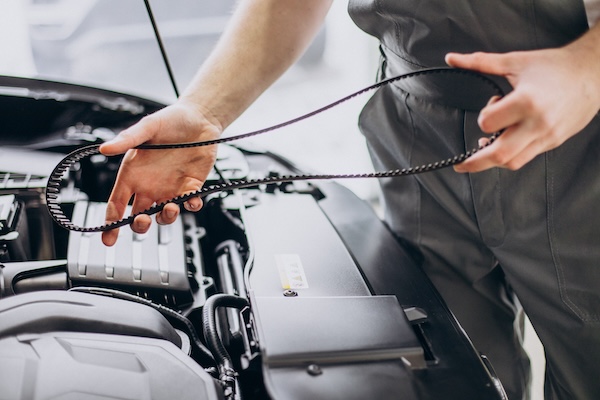
If you drive a German or Italian vehicle, chances are you’ve heard the terms timing belt and timing chain thrown around during service visits. These components don’t come up often, until there’s a problem. When they fail, the consequences can be costly and stressful. Understanding which one your vehicle uses, why manufacturers choose one over the other, and how to maintain it can help you make smarter decisions and protect your engine.
Timing components play a critical role in engine operation, and European brands approach them differently based on performance goals, engineering philosophy, and long-term durability.
What Do Timing Belts and Timing Chains Actually Do
Both timing belts and timing chains control the precise timing between the crankshaft and camshaft. This synchronization ensures valves open and close at exactly the right moment as pistons move up and down. When timing is off, or worse, when a belt or chain fails, the engine can suffer serious internal damage.
The main difference comes down to material and design:
- Timing belts are made of reinforced rubber and operate quietly.
- Timing chains are metal, similar to a bicycle chain, and are lubricated by engine oil.
Each has its advantages and drawbacks, which is why manufacturers choose one over the other based on the engine’s design and intended use.
Why European Brands Use Different Timing Systems
German and Italian automakers are known for performance-driven engineering, efficiency, and innovation. Their choice of timing system often reflects those priorities.
German brands such as BMW, Mercedes-Benz, Audi, and Volkswagen tend to favor timing chains, especially in modern engines. Italian manufacturers such as Alfa Romeo, Fiat, and Maserati may use either belts or chains, depending on the engine generation and model.
The decision usually comes down to durability expectations, engine size, performance demands, and maintenance philosophy.
Many German vehicles use timing chains, particularly in newer models. Common examples include:
- BMW: Most modern BMW engines use timing chains, designed to last longer than belts. However, some older BMW engines experienced premature chain wear, making inspections critical.
- Mercedes-Benz: Largely timing-chain-driven engines, especially in V6 and V8 platforms.
- Audi & Volkswagen: A mix of chains and belts depending on engine type and year. Older 1.8T and 2.0T engines often used timing belts, whereas newer designs tend toward timing chains.
Timing chains appeal to German manufacturers because they’re marketed as “lifetime” components. That said, lifetime doesn’t always mean maintenance-free. Chains rely on clean oil, proper tensioners, and guides—all of which can wear over time.
I
Italian brands are more evenly split between timing belts and chains:
- Alfa Romeo: Many engines, especially older and performance-focused ones, use timing belts that require strict replacement intervals.
- Fiat: Often uses timing belts in smaller engines, prioritizing cost efficiency and compact design.
- Maserati: Depending on the engine, some models use chains while others rely on belts, particularly in earlier generations.
Italian vehicles with timing belts often have shorter service intervals, making proactive maintenance especially important. Skipping a belt replacement can result in catastrophic engine failure.
Timing Belt vs. Timing Chain: What’s Better?
From a driver’s perspective, neither system is universally better—it depends on how you drive, maintain your vehicle, and what you expect long-term.
Timing Belts:
- Quieter operation
- Lower upfront replacement cost
- Require scheduled replacement (often between 60,000–100,000 miles)
Timing Chains:
- Designed for a longer lifespan
- No set replacement interval in many cases
- Can be expensive if they fail
- Sensitive to oil quality and maintenance
For owners who stay on top of maintenance, both systems can be reliable. Problems often arise when service intervals are ignored or warning signs are overlooked.
Warning Signs You Shouldn’t Ignore
Whether your vehicle has a timing belt or chain, certain symptoms can indicate trouble:
- Engine misfires or rough running
- Rattling noises, especially on cold starts (common with chain issues)
- Check engine light related to timing or camshaft position
- Oil contamination or metal shavings in oil
Addressing these signs early can prevent severe engine damage and significantly reduce repair costs.
Why Professional Belt and Chain Inspections Matter
European vehicles are engineered with tight tolerances and complex systems. Timing components are buried deep within the engine, making inspection and replacement labor-intensive. A trained technician can identify early wear, tensioner problems, or oil-related issues before they turn into major failures.
Knowing whether your German or Italian vehicle uses a timing belt or chain allows you to plan maintenance wisely instead of reacting to a breakdown.
Schedule Timing System Service at Prestige Autohaus in Walnut Creek
If you’re unsure which timing system your vehicle uses—or whether it’s due for service—professional guidance makes all the difference. Prestige Autohaus specializes in European vehicles and understands the unique needs of German and Italian engines.
Whether it’s a timing belt replacement, timing chain inspection, or preventative maintenance near Walnnut Creek, CA, our experienced technicians are here to help. Contact us today to schedule an inspection and keep your engine running strong for the road ahead.